Ministers in Saudi Arabia
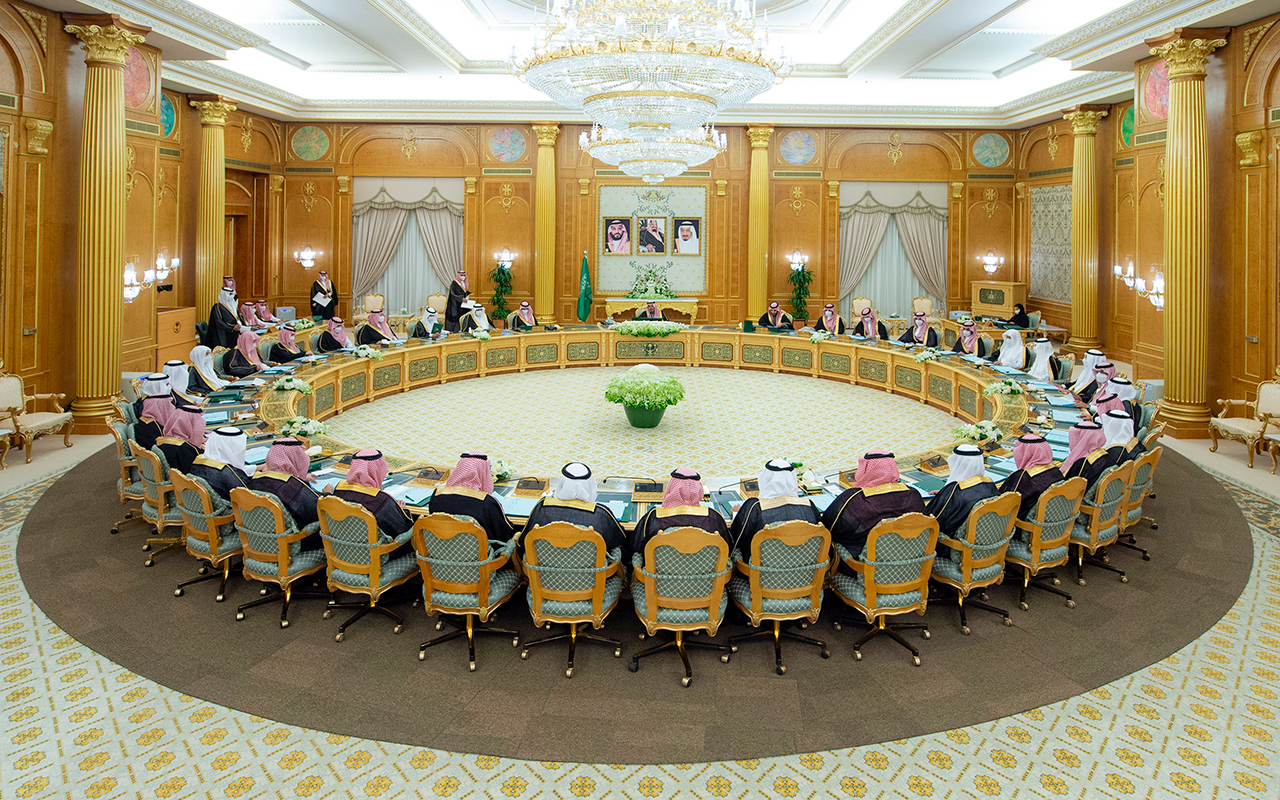
Ministers in the Kingdom of Saudi Arabia are in charge of the ministries within the Kingdom. They are members of the Council of Ministers and state ministers. They are assigned the duty of implementing legislation, laws, and the general policy of the state. They are appointed and dismissed by a royal decree.
Criteria for appointing a minister in the Kingdom
According to the Council of Ministers' law, before appointing a minister, he should be of Saudi origin and descent, known for his integrity and competence, and must not have committed a crime that violates religious and honorable standards. He should only start his duties after taking an oath in front of the King, which goes as follows: I swear by Allah the Almighty to be faithful to my religion, then to my king and country, not to disclose any of the state's secrets, to maintain its interests and regulations, and to perform my duties with honesty and fidelity.
Any citizen possessing the necessary qualifications and meeting the criteria can assume a ministerial position in the Kingdom. Each minister has a deputy appointed and dismissed by a royal decree, who assumes the minister's tasks in his absence. Except for the presence at the Council of Ministers, only another minister can represent an absent minister at the Council of Ministers.
Roles of the ministers in the Kingdom
Ministers' duties in the Kingdom revolve around directly overseeing the affairs of their ministries, implementing laws and regulations, attending Council of Ministers' sessions, maintaining the confidentiality of the Council's discussions, and proposing legislative projects or regulations related to their ministries' operations.
The Council of Ministers' law prohibits ministers from holding another governmental position unless deemed necessary by the head of the Council of Ministers. They are also not allowed to buy, rent, or lease any state property, nor sell or lease any of their properties to the government. They cannot engage in any commercial or financial activity, or be a member of any company's board of directors.
Prosecution of non-compliant ministers
Ministers are tried under a special system if they commit violations in their official duties. This system specifies the violations, indictment procedures, trial procedures, and the formation of the court panel.
Error 429 Too many requests
Too many requests
Error 54113
Details: cache-cmh1290022-CMH 1792781082 1532698560
Varnish cache server
Error 429 Too many requests
Too many requests
Error 54113
Details: cache-cmh1290022-CMH 1792781082 1532698560
Varnish cache server
Error 429 Too many requests
Too many requests
Error 54113
Details: cache-cmh1290022-CMH 1792781082 1532698560
Varnish cache server
Error 429 Too many requests
Too many requests
Error 54113
Details: cache-cmh1290022-CMH 1792781082 1532698560
Varnish cache server
Sources
Bureau of Experts at the Council of Ministers.
King Abdulaziz Foundation for Research and Archives (Darah).