Aseer Province
Aseer Province (Minṭaqat ʻAsīr) is one of the thirteen administrative regions of the Kingdom of Saudi Arabia, the fifth in terms of population, and the tenth in terms of surface area. It was administratively formed in 1992 and is located southwest of Saudi Arabia. It is bordered from the east by Najran Province, from the south by Jazan Province and part of the Republic of Yemen, from the north by Makkah Al-Mukarramah and Al-Bahah provinces, and from the northeast by Riyadh Province. It also overlooks the Red Sea from the west. It has an area of eighty thousand km, equivalent to 4.1 percent of Saudi Arabia’s territory.
Administrative structure of Aseer Province
Aseer Province comprises eighteen governorates and 128 centers, in addition to the city of Abha, its administrative capital. Its Governor is Prince Turki Bin Talal Bin Abdulaziz Al Saud, serving since 2018, and its Deputy Governor is Prince Khalid Bin Sattam Bin Saud Bin Abdulaziz, serving since December 12, 2023.
Governorates of Aseer Province:
| Governorate | Category |
|---|---|
| Khamis Mushait | A |
| Bisha | A |
| Al-Namas | A |
| Mahayil Aseer | A |
| Tathleeth | A |
| Rijal Almaa | A |
| Dhahran Al-Janoub | A |
| Sarat Abidah | B |
| Ahad Rafidah | B |
| Balqarn | B |
| Al-Majardah | B |
| Tanumah | B |
| Tarib | B |
| Bareq | B |
| Al-Birk | B |
| Al-Harajah | B |
| Al-Amwah | B |
| Al-Farshah | B |
Administrative capital of Aseer Province
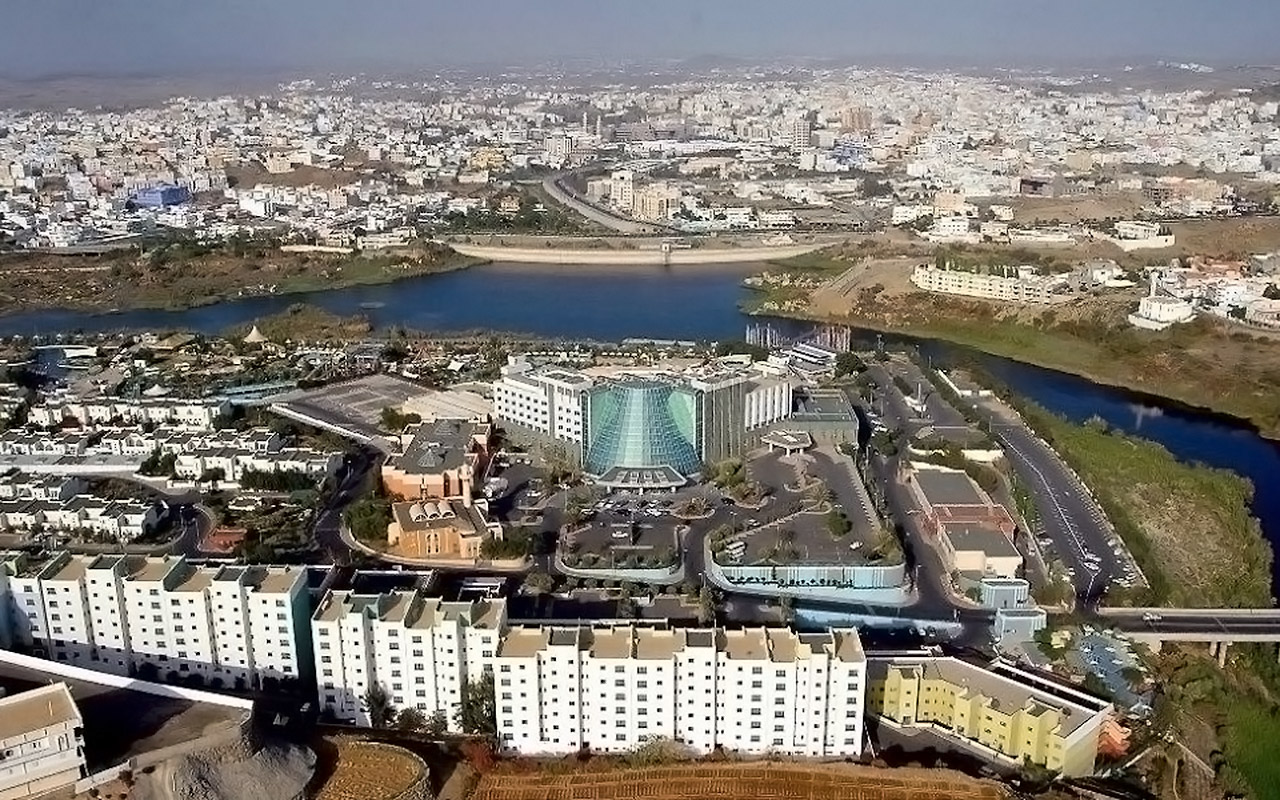
The city of Abha serves as the administrative capital and seat of the emirate. It leads the urban areas in Aseer in terms of public services; however, only 20.9 percent of the population resides in Abha, while 29.7 percent is concentrated in Khamis Mushait Governorate. Aseer Province is served by Abha International Airport, located in the administrative capital of Abha, with an annual capacity of 1.1 million passengers.
Geography of Aseer Province
Aseer Province is one of five provinces in Saudi Arabia with a population exceeding the two million mark and the third in terms of highest population density, at twenty-five persons per km of its territory. The population of Aseer Province is 2,024,285 people, equivalent to 6.3 percent of Saudi Arabia's total population, 71.4 percent majority of them are Saudis.
Climate of Aseer Province
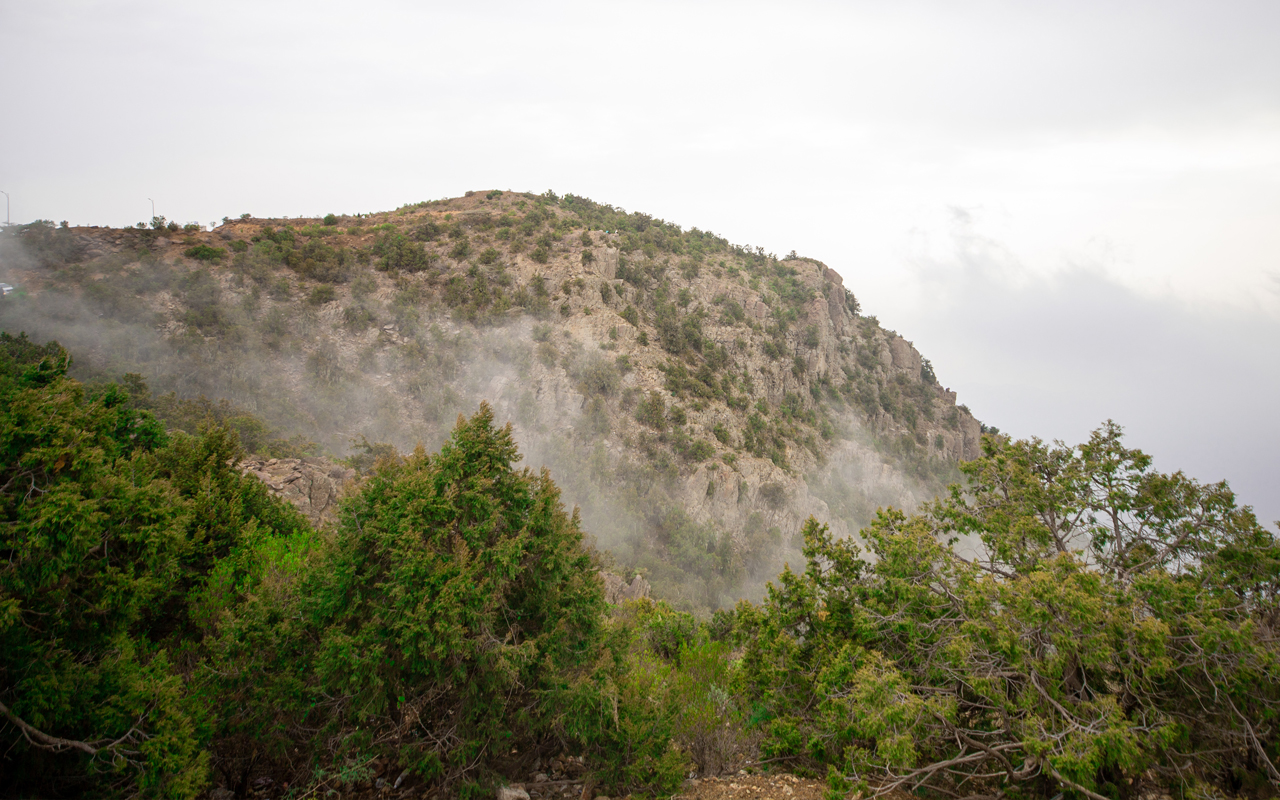
The province's climate is relatively cold during the winter and mild in the summer, with August temperatures not exceeding twenty-four degrees Celsius, which is low compared to average temperatures in other provinces of Saudi Arabia. Because seasonal winds blow across the province, rainfall is frequent, rainstorms are not uncommon, and they happen mostly in parts higher than sea level.
Mountains and lavabeds in Aseer Province
Aseer Province has a wide range of recreational opportunities by virtue of its diverse geographic nature, combining plains, coastlines, and mountains. It includes the twelve highest mountain peaks in Saudi Arabia, the highest being Al-Soudah Mountain, west of Abha, soaring 3,015 m above sea level.
Lavabeds represent 2.5 percent of Aseer Province’s area, some of which are thirty million years old. Eight of Saudi Arabia's valleys pass through its territory, and the province is the lowest in Saudi Arabia in the proportion of sand clusters, representing just 1 percent of the total sand clusters in Saudi Arabia.
Canyons and mountain path of Aseer Province
Aseer Province is classified as a mountainous region, with 29 percent of the mountains of Saudi Arabia falling within its territory. It is a series of mountains punctuated by rugged canyons and mountain paths. Aseer got its name from its rugged terrain. However, Aseer Province is fifth among the provinces of Saudi Arabia in terms of the longest roads, at 5,259 km long, the longest of which is the road connecting Abha to Makkah Al-Mukarramah and Najran provinces.
Aseer Province has a 140-km-long waterfront, and three of the province's governorates fall on the Red Sea coast: Rijal Almaa, Mahayil Aseer, and Al-Barik, but only 15 percent of its population lives on the coast. The province is characterized by varying highlands on its territory, acting as vistas for tourists, long-lying valleys, and a mild climate year-round, making it a tourist destination among Saudi Arabia and Arabian Gulf countries.
Aseer: past and present
To this day, the province's heritage is reflected in local manifestations of life through inscriptions adorning the facades of buildings, roads, collectibles, and household utensils. Hence, the province drew global attention after Al-Qatt Al-Asiri artistic inscriptions were added to UNESCO's Lists of Intangible Cultural Heritage. Popular fashion, renowned for its preference for black and red, continues to be worn in the region, with some changes, and represents a prevalent dress trend in a large cross-section of society in Aseer.
Monuments in Aseer Province
There are 4,275 historical villages in Aseer Province. To the west of the city of Abha lies the village of Al-Muftaha, which is the cultural heritage icon of the province's identity. More than thirty years ago, it was transformed into a landmark and tourist attraction. It is an old village and tourist destination that retains the province's heritage and includes the King Fahd Cultural Center and the Talal Madah Theater, the largest theater in Saudi Arabia.
To the west of the area, forty-five km from the seat of the emirate, lies the historical village of Rijal Almaa, situated in the foothills. It comprises eight serried palaces up to six stories high, decorated from the outside with white quartz and from the inside with Al-Qatt Al-Asiri inscriptions.