Saudi Foreign Aid
Saudi Foreign Aid refers to the developmental and humanitarian assistance provided by the Kingdom of Saudi Arabia since its unification by the Founding King Abdulaziz Bin Abdulrahman Al Saud to countries in need and those stricken by disasters. Aid encompasses humanitarian, developmental, and charitable projects, in addition to contributions made in favor of international organizations and bodies.
Saudi Arabia established the King Salman Humanitarian Aid and Relief Center (KSRelief) to coordinate humanitarian efforts and the Saudi Fund for Development to finance development projects worldwide.
KSRelief
Saudi Arabia founded King Salman Humanitarian Aid and Relief Center in 2015 as an international center dedicated to providing humanitarian aid and relief. The center was established with a capital of SAR1 billion. Within the scope of its work, it provides relief aid to those in need and those stricken by disasters in the countries of the world. Such aid is provided according to a specific monitoring mechanism and upon using rapid transportation methods. It is also provided with the help of United Nations organizations as well as international and local non-profit organizations in the countries benefiting from such aid. The center has diverse projects and programs that vary according to the beneficiaries and their circumstances, where aid covers all sectors of relief and humanitarian aid.
Initiatives and programs of KSRelief
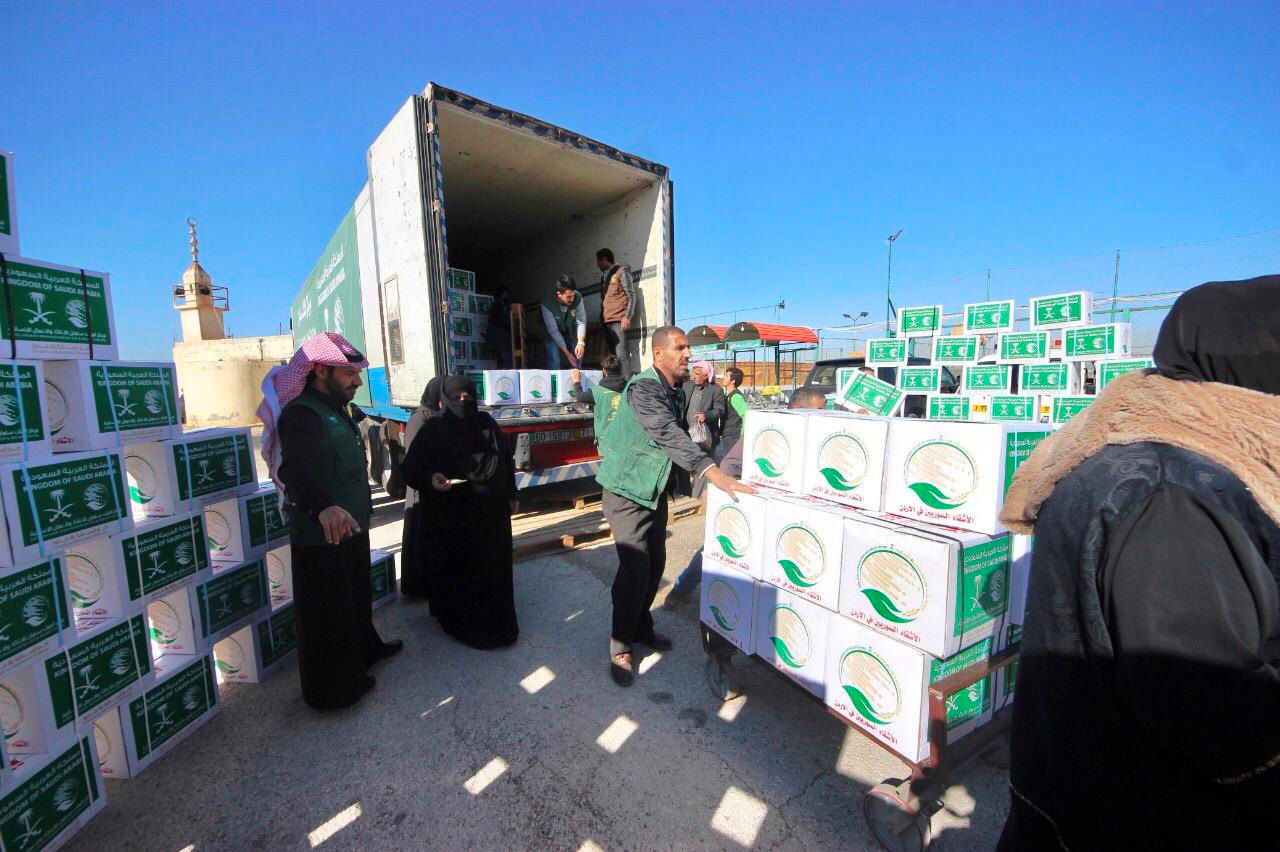
The King Salman Humanitarian Aid and Relief Center has implemented numerous humanitarian programs and initiatives to deliver relief aid to millions of beneficiaries worldwide. It has also launched various portals and platforms, including:
Saudi International Volunteer Portal
The Saudi International Volunteer Portal enables individuals interested in volunteer work to register and participate in the center's humanitarian and relief efforts and projects.
Sahem Platform
The center has launched the Sahem Platform, which provides an opportunity to make electronic donations using credit cards and online payment methods to support the center's programs. The platform enables donors to create personal accounts and follow-up on programs they support.
Malath Project
The center adopted the Malath Project, which seeks to rehabilitate children recruited and affected by the armed conflict in Yemen. Toward this end, it dedicated a set of programs and projects, including those aimed at contributing to their integration into society, enrolling them in schools, following up on their affairs, ensuring their psychosocial rehabilitation, and holding courses in this regard, where these courses target them and their families.
The project also raises parents' awareness about the dangers of child recruitment, striving to create a healthy family environment through educational courses that highlight and clarify laws that criminalize the recruitment of children and deprive them of the right to live a normal and healthy childhood.
Artificial Limbs Program
The center established the Artificial Limbs Program to support and finance prosthetic centers that provide free services to those injured by amputations caused by landmines planted by Houthi militias in Yemen.
The program aims to provide prosthetic limbs to the injured and rehabilitate patients so that they can become productive individuals capable of working and leading everyday lives. It also focuses on training local personnel in prosthetic limb manufacturing technologies and building the capacity of health institutions to ensure the localization and sustainability of these services.
Project Masam
Project Masam for clearing Yemeni territories of mines was launched in 2018. It aims to clear Yemeni lands of mines, eliminate direct threats to the lives of the Yemeni people, enhance security in Yemeni territories, and support the Yemeni people in addressing the humanitarian crises resulting from the spread of landmines.
The project is implemented in several phases, starting with rapid response to emergency cases, clearing the area of mines, training local Yemeni teams, and then carrying out comprehensive clearance of areas across Yemen following international standards for demining.
International Journal of Humanitarian Studies
It is a peer-reviewed and semi-annual journal published by the King Salman Humanitarian Aid and Relief Center in cooperation with the King Faisal Center for Research and Islamic Studies in the field of humanitarian and relief work. It is concerned with publishing peer-reviewed academic research, field studies and their findings, and the best practices in relief and humanitarian work.
The journal targets academics and researchers in this field, as well as practitioners and employees working in the field of relief, humanitarian work, and human rights. It seeks to instill relief work as a science subject to research, study, and development, where relevant findings will reflect positively on the services provided to refugees globally.
Beneficiaries of the aid provided by KSRelief
The aid provided by King Salman Humanitarian Aid and Relief Center has benefited 105 countries worldwide. As of 2024, the center has implemented approximately 3,116 projects, partnering with 454 entities, at a total cost of around USD7.1 billion. The projects covered various sectors, including:
Food Security: including approximately 906 projects at a cost of USD2 billion, with Yemen being the highest beneficiary, receiving 141 projects totaling USD1.4 billion.
Health: About 1,275 projects, costing USD1.4 billion, with Yemen benefiting the most from this aid with 533 projects, totaling USD961 million.
Humanitarian Operations Support and Coordination: Up to fifty-nine projects with a cost of USD980 million, with Yemen at the forefront with thirty projects totaling USD686 million.
Shelter and Non-Food Items: 243 projects, totaling USD619 million, with Yemen leading with fifty-eight projects, costing USD209 million.
Early Recovery: encompassing up to seventy-nine projects totaling USD235 million, with Yemen benefiting from thirty-one projects worth USD129 million.
Water and Environmental Sanitation: 102 projects costing USD300 million, with Yemen at the top with forty-four projects, totaling USD237 million.
Education: 135 projects at a total cost of USD235 million, with Yemen receiving thirty-five projects, costing USD137 million.
Aid for refugees within Saudi Arabia
King Salman Humanitarian Aid and Relief Center launched a program to help refugees in Saudi Arabia. The program benefited refugees of three nationalities, Yemenis, Syrians, and Rohingya, who benefited from aid amounting in total to USD19 billion in Saudi Arabia. They also benefited from various services offered by Saudi Arabia, including free education and treatment. Saudi Arabia has been keen to integrate them into society and provide them with employment and education opportunities in public schools, upon noting that they represent about 5.5 percent of the total Saudi population.
The total aid provided by the General Directorate of Passports in the services sector amounted to USD7.4 billion, USD5.6 billion in the education sector, and USD6 billion in the healthcare sector.
Education empowerment services for refugees in Saudi Arabia
Sons and daughters of refugees in Saudi Arabia have been studying in public schools since Ministry of Education issued a unified form for accepting male and female students on a visitor's visa for Syrian and Yemeni refugees. The ministry has also enabled visiting male and female students to register for Qiyas tests to complete the requirements for enrolling in universities, where this became possible thanks to an e-service provided by the Ministry of Education.
Saudi Arabia also offers a dedicated service for resident non-Saudi students, allowing them to obtain government scholarships. Refugees (visitors) received by Saudi Arabia until 2024 are estimated at approximately 1,074,153, coming from Yemen, Syria, and Myanmar.
Saudi aid during refugee crises
Saudi Arabia plays a significant role in the relief efforts of the United Nations High Commissioner for Refugees (UNHCR). It has donated to provide relief for refugees in various countries worldwide and consistently supports the UNHCR's work and projects.
Saudi Arabia also supports the UNHCR's work through charitable and development institutions, including King Salman Humanitarian Aid and Relief Center, the Saudi Fund for Development, and the Saudi Red Crescent Authority. It also provides ongoing healthcare and notable efforts in the field of education.
Saudi Arabia provides aid to refugees without any discrimination based on race, gender, religion, sect, or confession. It tackles each case from a humanitarian point of view, providing assistance to all refugees around the world who have suffered the scourge of forced displacement for religious or ethnic reasons, or due to wars and internal and external political conflicts, where Saudi Arabia provides them with the basic services required to ensure a decent life, including shelter, education, nutrition, and treatment.
Saudi Development and Reconstruction Program for Yemen
The Saudi Development and Reconstruction Program for Yemen was established in 2018 by a Supreme Order by the Custodian of the Two Holy Mosques, King Salman Bin Abdulaziz Al Saud, to support development and reconstruction efforts in the Republic of Yemen.
Program objectives
The program seeks to provide full support in terms of several aspects, including economic and sustainable development in various sectors in the Republic of Yemen. The program is executed under a comprehensive development agreement between the governments of Saudi Arabia and Yemen. It implements development programs and projects that contribute to enhancing the level of essential services offered to the Yemeni people and providing job opportunities to them, while seeking to develop infrastructure, enhance the capacity of government institutions, and cover Yemen's development loans and grants, upon applying the highest standards of governance.
Projects and initiatives of the program
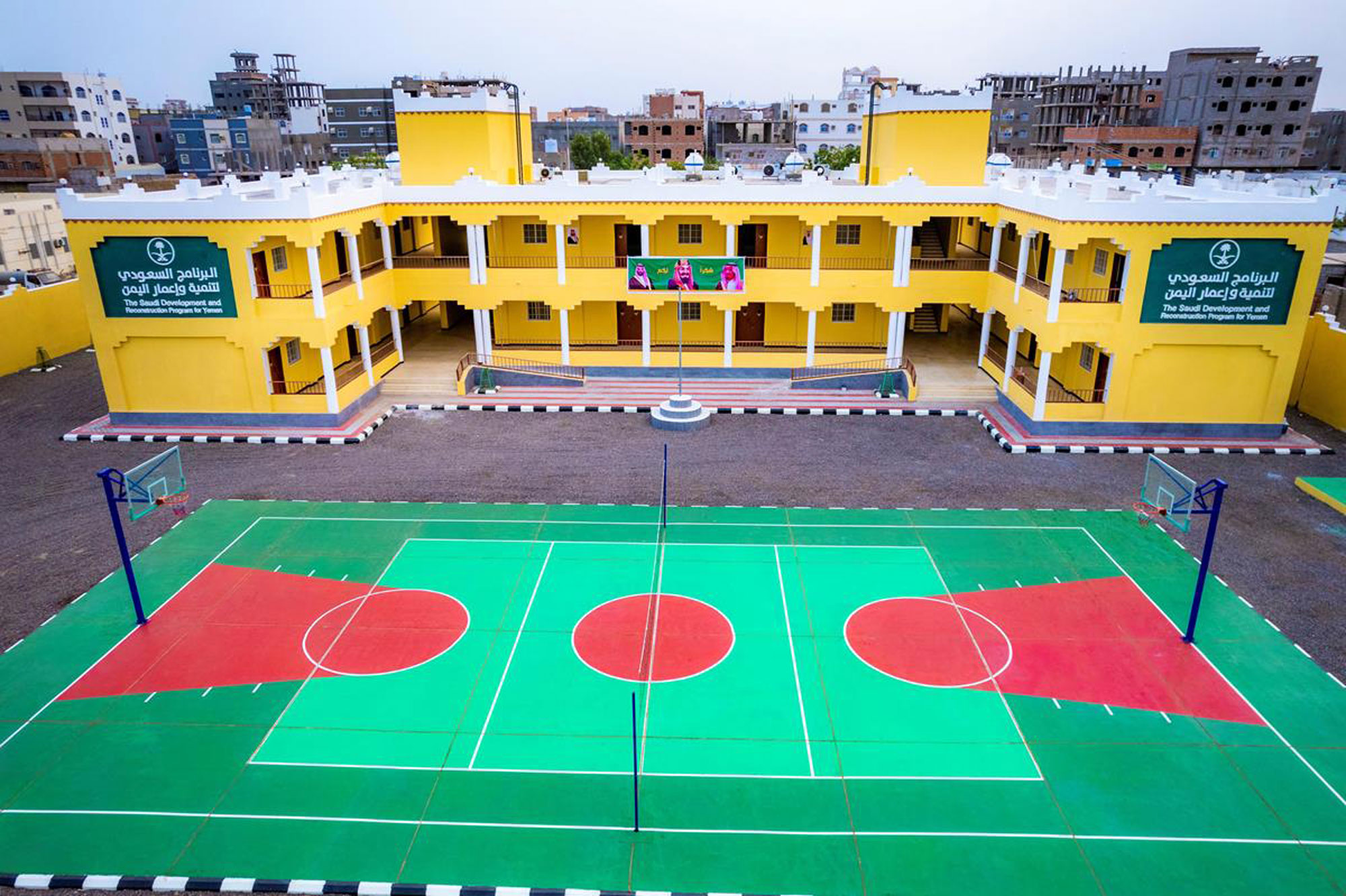
The Saudi Development and Reconstruction Program for Yemen implemented around 247 projects and initiatives in various governorates and cities of Yemen until 2024. These projects and initiatives were executed in eight development sectors at a total value exceeding USD1 billion. The program also supervised the oil derivatives grant worth USD592 million. The number of projects in the development programs sector amounted to twenty-five projects, along with fifty-nine projects in the education sector, eighteen projects in the agriculture and fisheries sector, thirty-eight projects in the health sector, twenty-seven projects in the energy sector, fifteen projects in the government capacity development and support sector, thirty-three projects in the energy sector, and thirty-two projects in the transportation sector.
Saudi Aid Platform
The Custodian of the Two Holy Mosques, King Salman Bin Abdulaziz Al Saud launched the Saudi Aid Platform on February 26, 2018, to serve as an official electronic platform that documents the aid provided by Saudi Arabia to countries in need as well as to bodies, institutions, and organizations around the world, and to serve as a key reference for scholars and interested parties.
The platform collects, coordinates, and documents statistics related to Saudi Arabia's foreign aid, highlighting the size and type of aid provided to countries in need and their people. It requires donors to register their donations electronically through this platform, which was designed by the King Salman Humanitarian Aid and Relief Center. The center has also dedicated forms to register humanitarian, developmental, and charitable projects and contributions, all according to the international standards of registration and documentation.
The platform contains data on aid and its classification since Saudi Arabia's foundation until now. Donor entities have undergone training to collect data and use the platform. Each donor entity has been provided with an electronic account to record aid, and the platform allows anyone to view this data.
King Salman Humanitarian Aid and Relief Center periodically documents international aid granted on behalf of Saudi Arabia in favor of the relevant organizations and that, once Saudi donors register their data in the platform. The platform divides its work into three main categories, humanitarian, developmental, and charitable projects, contributions to international organizations and bodies, and services for visitors and refugees in Saudi Arabia.
The aid provided by Saudi Arabia between 1975 and 2024 amounted to SAR498.54 billion (USD132.94 billion). The number of humanitarian, developmental ,and charitable projects registered in the platform amounted to 7,195 projects, benefiting 171 countries worldwide.
Humanitarian, developmental, and charitable projects
Saudi Arabia has extended foreign aid to all continents and subcontinents, reaching approximately USD112.55 billion by 2024. In Asia, the number of projects reached approximately 3,672, costing USD58 billion. In Africa, the number of projects reached 2,019, costing USD47 billion.
Projects executed in Europe amounted to 420 projects with a value of USD1.1 billion, while those implemented in the Americas amounted to 142 projects with a value of about USD1.2 billion. Fifteen projects were executed in Oceania with a value of USD9 million. Sixteen projects were delivered in Australia with a value of about USD2 million, in addition to global aid involving the implementation of 811 projects with a value of USD3.3 billion.
The Arab Republic of Egypt was the top beneficiary of humanitarian, developmental, and charitable projects, receiving approximately USD32 billion. It was followed by the Republic of Yemen, with USD16 billion; Pakistan, with USD13 billion; Iraq, with USD7 billion; and Palestine, with USD5 billion.
Countries that received Saudi aid included Taiwan, Hungary, the Dominican Republic, Sao Tome and Principe, the Czech Republic, Bolivia, Dominica, and Ecuador.
The number of Saudi bodies donating in favor of humanitarian, development, and charitable projects amounted to nineteen, including the Ministry of Finance with a contribution of USD36 billion, the Ministry of Energy which contributed USD35 billion, the Saudi Fund for Development with a contribution of USD27 billion, King Salman Humanitarian Aid and Relief Center with USD7 billion, and the Saudi Development and Reconstruction Program for Yemen with a contribution amounting to USD2.1 billion.
The Ministry of Foreign Affairs donated USD1.3 billion, the Ministry of Education contributed with USD1 billion, while other agencies had a contribution amounting to USD710 million. the The contribution of King Abdullah Bin Abdulaziz International Foundation amounted to USD570 million, while the Saudi High Commission for the Relief of Bosnia and Herzegovina contributed an amount of USD561 million, followed by the Saudi Red Crescent with a contribution of USD75 million.
The Ministry of Environment, Water, and Agriculture, represented by the Saudi Irrigation Organization, donated an amount of USD59 million. The contribution of the Ministry of Health amounted to USD7 million, followed by the Ministry of National Guard, represented by Health Affairs with a contribution of USD6 million. King Faisal Specialist Hospital and Research Center made a contribution valued at USD6 million, followed by the Ministry of Media with USD5 million, the Ministry of Islamic Affairs, Dawah, and Guidance with USD1.1 million, the Ministry of Transport and Logistic Services with USD1 million, and the Zakat, Tax and Customs Authority with USD650,000.
Saudi financial contributions to international organizations and bodies
Saudi Arabia has significantly contributed to international organizations and bodies involved in diverse projects and initiatives. Twenty-nine contributions, amounting to USD1.30 billion, were allocated to twelve entities.
Some of the organizations and bodies that received Saudi aid include the Asian Infrastructure Investment Bank, benefiting from USD305 million, the Arab Fund for Economic and Social Development, benefiting from USD238 million, the International Bank for Reconstruction and Development, benefiting from USD183 million, the Islamic Development Bank, benefiting from USD133 million, and the Arab Bank for Economic Development in Africa, benefiting from USD102 million. The two Saudi donors were the Saudi Fund for Development, which contributed USD1.1 billion, and the Ministry of Finance, which provided USD183 million.
Saudi Fund for Development
Saudi Arabia launched the Saudi Fund for Development, which was established by Royal Decree in 1974. The fund is mainly tasked with providing development support through facilitated development loans provided to finance development projects in developing countries, ultimately supporting the achievement of economic and social growth in those countries.
The fund contributes to improving the standard of living within the poorest communities. It represents Saudi Arabia's development arm within the framework of international development. It implements grant projects and development programs offered by the Saudi government to support the least developed and poorest countries. The fund partners and cooperates with regional and international organizations to achieve its objectives, including achieving sustainable development and enhancing the effectiveness of development aid.
The total number of development projects and programs offered by the fund until 2023 yearend amounted to more than 741 development projects, with funding reaching about SAR77.8 billion, benefiting ninety-three countries. The fund has also concluded 779 agreements for the provided loans. Moreover, forty-seven African countries benefit from 433 of the fund's projects and programs, with a value of USD11.4. In Asia, thirty countries benefited from 265 projects and programs, with total funding amounting to about USD7.4 billion. In other countries and regions, eight countries benefited from twenty-two projects and programs that were funded with USD490 million.
The fund sponsors multiple development sectors including transportation and communications, agriculture, energy, social infrastructure, industry and mining, international organizations, and various other sectors. The fund supports stable economic development by providing financial, technical, and human resources, ultimately leveraging Saudi Arabia's strengths to meet the needs of its partners.
Foreign humanitarian efforts during the COVID-19 pandemic
Saudi Arabia played a significant local and global role in combating the COVID-19 pandemic, providing substantial humanitarian, medical, and food aid.
This aid reflects the role assumed by Saudi Arabia in supporting international efforts to limit the spread of this pandemic, namely within the framework of the program it has established to support the countries that are the most in need with vaccines and the necessary medical and preventive aid. Moreover, Saudi Arabia has provided foreign aid to several countries, where aid was in the form of the delivery of medical aid represented by nearly 1.5 million doses of vaccines to the People's Republic of Bangladesh. In this respect, the Saudi Embassy delivered the doses, ultimately contributing to mitigating the severity and spread of this virus.
As part of its relief project, Saudi Arabia partnered with the Global Alliance for Vaccines and Immunization (GAVI), the Coalition for Epidemic Preparedness Innovations (CEPI), the World Health Organization (WHO), and other international organizations, contributing USD500 million to the COVAX Facility.
King Salman Humanitarian Aid and Relief Center delivered medical aid, including ventilators and other preventive medical supplies to the Togolese Republic, ultimately supporting the country in combating the pandemic. Within the framework of its provided foreign aid package for combating the Coronavirus pandemic, Saudi Arabia donated an amount of SAR10 million in support of the World Health Organization. It also provided a set of aid and health supplies to the People's Republic of China, where these supplies consisted of ventilators, infusion pumps, IV infusion pumps, defibrillators, patient monitoring devices, protective covers and clothing, and masks.
Saudi Arabia supported the Republic of Yemen with the supply of special equipment, medicines, and medical supplies valued at USD3 million to help the country in combating the pandemic. It also cooperated with the World Health Organization to establish a project valued at USD10 million to equip quarantine rooms, permanent preparedness, and case diagnosis. Moreover, Saudi Arabia has supported Palestine upon offering aid valued at more than USD3 million.
Through King Salman Humanitarian Aid and Relief Center, Saudi Arabia contributed approximately USD845 million to support global efforts to restrain the COVID-19 pandemic. This included a variety of medical and preventive aid that benefited thirty-four countries worldwide.
Sources
Saudi Aid Platform.
Unified National Platform.
King Salman Humanitarian Aid and Relief Center.
Saudi Development and Reconstruction Program for Yemen.
Saudi Press Agency (SPA).