Oil Discovery in Saudi Arabia
The Discovery of Oil in the Kingdom of Saudi Arabia stands as one of two pivotal events that unfolded simultaneously. The first event was the issuance of a Royal Decree announcing the reunification of the country, starting on September 23, 1932. The second event was the discovery of oil after geological indicators suggested the presence of oil reserves underground in the Eastern Province. This prompted Founding King Abdulaziz Bin Abdulrahman Al Saud to sign the concession agreement for oil exploration with the Standard Oil Company of California (SoCal) on May 29, 1933. A Royal Decree to that effect was issued on July 7, 1933, and was published in the Official Gazette, Umm al-Qura.
History of oil discovery agreements signing in Saudi Arabia
This was not the first oil concession agreement signed in the Kingdom. King Abdulaziz had signed an oil concession with the British Eastern and General Syndicate Ltd on 10 April 1923.The Times newspaper published the news of this concession signing on May 21, 1923. Upon its approval, the agreement comprised twenty-five articles, delineating the concession area to approximately thirty-six thousand m
Due to the struggles in oil exploration and the company's financial constraints hindering its ability to continue its operations and meet its commitments, King Abdulaziz canceled the concession agreement in 1928. In the following year, 1929, the onset of the global economic crisis led to a downturn in the state's resources. The Saudi government tasked a new company with searching for water sources, and the owner of that company was an American named Charles Crane.
King Abdulaziz hosted Charles Crane in Jeddah on February 25, 1931. An agreement was reached to send a specialized expert, geologist Karl Twitchell, who traveled through various regions of the Kingdom, starting from the western region, then the central region, and finally to the Eastern Province. In early 1932, he presented the results of his survey on water resources. He informed King Abdulaziz of his expectations regarding the presence of oil in the sedimentary rock formations beneath the lands of al-Ahsa. He also supported the idea of building a port in Ras Tanura. However, he did not definitively confirm the presence of oil in commercial quantities.
During that time, the Bahrain Petroleum Company successfully discovered commercial quantities of oil in Jabal al-Dukhan, Bahrain, on May 21, 1932. This discovery rekindled hope and encouraged King Abdulaziz to search for investors to explore and extract oil. This effort quickly led to the signing of the second concession agreement with the Standard Oil Company of California (Socal) on May 29, 1933.
This agreement consists of thirty-seven articles, with the most notable provisions being: The duration of the concession is sixty years, and the company must provide a loan to the government amounting to GBP50,000 in gold, payable in two installments. The company must also pay the government an annual lease of GBP5,000 in gold. Furthermore, the company is required to pay other loans upon the discovery of oil in commercial quantities, in addition to royalties paid to the government by the company on crude oil.
After the signing, the first geological expedition arrived in the coastal town of al-Jubail on the Arabian Gulf on October 3, 1934. In 1933, the company transformed the concession into the California Arabian Standard Oil Company (CASOC).
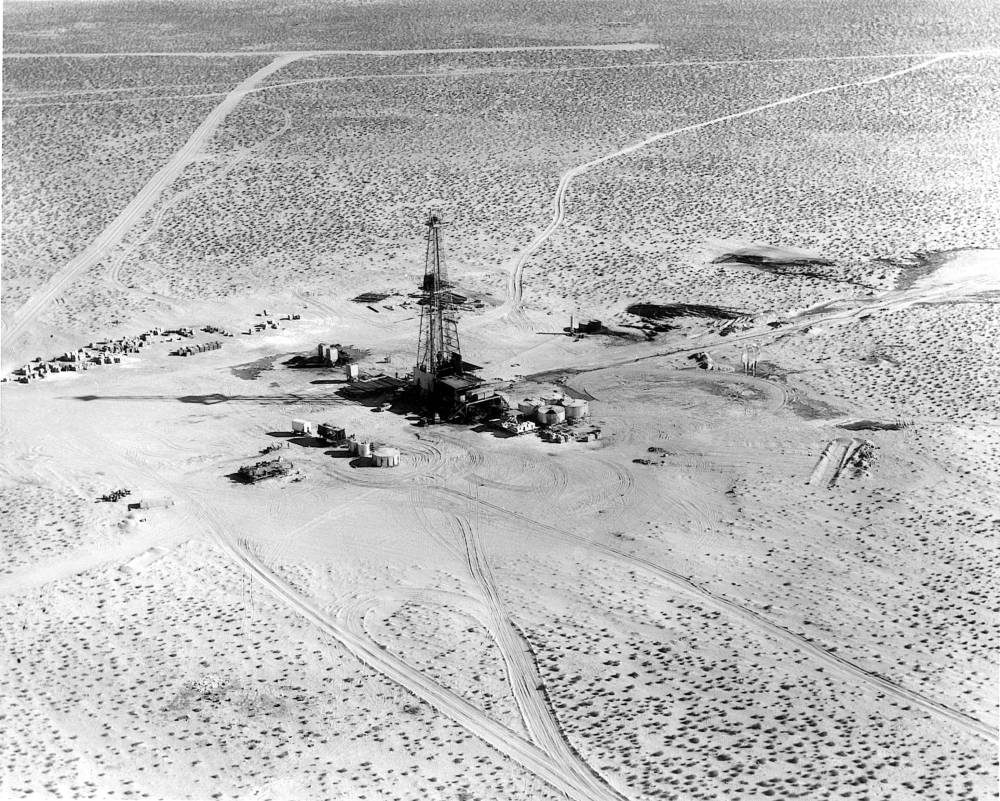
On April 30, 1935, it was decided to start drilling the 'Dammam Well No. one'. After seven months, the well produced a strong flow of gas and some oil, but equipment malfunction forced the drilling crew to halt the flow of the well, which was plugged with cement. On February 8, 1936, the drilling of 'Dammam Well No. 2' commenced. It yielded a flow of 335 barrels per day, eventually escalating to 3,840 barrels per day. This encouraged the drilling of wells No. three, four, five, and six in Dammam. Subsequently, a decision was made in July to prepare 'Well No. seven' for deep testing.
In December 1936, specialists in exploratory well drilling began drilling the deep test well 'No. seven.' Oil flowed from this well in the first week of March 1938 at a depth of 1,440 m below the surface. Its production reached 1,585 barrels per day, and subsequently, production continued to increase.
Within a few months, storage tanks, pipelines, and a small loading station were constructed in Dammam. In September 1938, the company began shipping oil to the Bapco refinery in Bahrain, and on October 16, 1938, commercial production was officially announced.
On May 1, 1939, King Abdulaziz visited Dhahran to celebrate the loading of the first oil tanker in Ras Tanura. This coincided with the completion of the pipeline that extended from the Dammam field to the Ras Tanura port, with a length of sixty-nine km. The oil tanker 'D.G. Scofield' docked there, and King Abdulaziz personally operated the valve to fill it with the first shipment of Saudi oil. This was the first shipment of crude oil exported by the Kingdom on a tanker.
Exploration activities persisted after that, leading to the discovery of the first oil well in Abqaiq Governorate in 1941, which was named then as (Abqaiq Well No. one). This was followed by the discovery of (Abqaiq Well No. two), with drilling operations concluding in 1942. Subsequently, (Abqaiq Well No. 3) was discovered, with drilling completed in January 1943.
The Kingdom currently holds 19 percent of the global reserves and 12 percent of global production, with more than 20 percent of petroleum sales in the global market. The country also has a refining capacity exceeding five million barrels per day domestically and internationally. The fixed petroleum reserves in the Kingdom are estimated at about 267 billion barrels. Also, the Kingdom is the seventh-largest natural gas market in the world.
Saudi Aramco
The beginnings of Saudi Aramco are linked to the conclusion of the concession agreement between the Kingdom and the Standard Oil Company of California (SoCal). At that time, a subsidiary was established named the California Arabian Standard Oil Company (CASOC) to manage this agreement.
In 1936, Texaco acquired a 50 percent stake in CASOC. CASOC achieved its first commercial success in 1938 at the Dammam field in Dhahran City, where this site immediately began producing more than 1,500 barrels of crude oil per day. In 1944, the name of the 'California Arabian Standard Oil Company (CASOC)' was changed to 'Arabian American Oil Company'.
The company's business steadily grew, and in 1948, the 'Standard Oil Company of New Jersey,' which later became known as 'Exxon,' purchased a 30 percent stake in the company. Additionally, 'Socony Vacuum Oil Company,' which later became known as 'Mobil,' bought a 10 percent stake to help provide marketing outlets and capital for the Kingdom's hydrocarbon resource reserves.
With the rapid increase in oil production, it became necessary for the company to expand its operations in the distribution sector as well. In 1950, the company completed the construction of the Arabian Pipeline, known as 'Tapline,' extending from the Arabian Gulf coast to the Red Sea coast, with a length of 1,700 km, including 1,200 km within Saudi territory. It was considered the longest in the world at that time.
In a historic development, the company's main headquarters moved from New York City to Dhahran in 1952. Then, in 1973, the Kingdom acquired an initial stake of 25 percent in the company, which was subsequently increased to 60 percent in 1974.
The company continued its exploratory efforts and discovered the 'Safaniya Offshore Field' in 1951, which is considered the largest offshore oil field in the world. In 1958, Saudi Aramco's crude oil production exceeded one million barrels in a single calendar year.

By 1962, the company achieved another significant milestone, reaching a cumulative crude oil production of five billion barrels. In 1973, the Kingdom acquired a 25 percent participation stake in Aramco. In 1975, Saudi Aramco designed, developed, and operated the master gas network, which was described as one of the most ambitious energy projects in history.
By 1981, for the first time, the shipment of crude oil and petroleum products from the marine terminal in Ras Tanura exceeded one billion barrels annually.
The company continued to grow, and by 1976, it became the world's largest oil producer in terms of the quantities produced in a single year, being the first to produce more than 3 billion barrels of oil annually. During the period between 1980 and 1981, the government increased its participation stake in the company's rights in crude oil concessions, production, and production facilities to 100 percent.
During the 1980s, the company increased its production and expanded its infrastructure by constructing the East-West Pipeline, which is 1,200 km long and designed to transport crude oil from Dhahran to the city of Yanbu overlooking the Red Sea.
The nationalization of the company was completed in 1980, with the Saudi government taking full ownership of Aramco. Eight years later, the Saudi Arabian Oil Company (Saudi Aramco) was officially established by Royal Decree No. M/8 dated November 13, 1988. This decree transferred the rights and concessions of the Arabian American Oil Company to Saudi Aramco. At that time, the company was led by Engineer Ali Bin Ibrahim al-Naimi, who became the first Saudi president of the company in 1984, and then the first president and CEO of Saudi Aramco in 1988.
Saudi Aramco continued to develop its business and in 1995, it completed the construction of fifteen huge crude oil tankers. In 1998, production began from the Shaybah field located in the Empty Quarter desert, which is considered one of the largest projects of its kind anywhere in the world.
In 2020, the development of the giant Jafurah field in the Eastern Province was officially announced. It is the largest unconventional non-associated gas field discovered in the Kingdom. With an estimated gas reservoir holding about 200 trillion ft

Recent discoveries
Exploration efforts persisted in the Kingdom, evidenced in 2020, when Saudi Aramco discovered two new oil and gas fields in the northern parts of the Kingdom. These are: the Hadabat al-Hajara gas field in the al-Jawf Province and the 'Abraq al-Toloul' oil and gas field in the Northern Borders Province.
Rich gas with condensates flowed from the Sara reservoir in the Hadabat al-Hajara field, east of the city of Sakaka, at a rate of sixteen million standard ft
In 2020, the discovery of unconventional oil was announced at the al-Reesh field, northwest of Dhahran City. Very light Arabian oil flowed from al-Reesh Well No. two at a rate of 4,452 barrels per day, accompanied by 3.2 million standard ft
Unconventional gas was also discovered in al-Sara reservoir, at the Munhaz Well, southwest of the Ghawar field, and at the Sahba Well, south of the same field. Gas flowed from the Munhaz Well at a rate of eighteen million standard ft
In 2022, the discovery of the 'Shedgum' natural gas field was announced in the central region, 180 km southeast of Riyadh City, after gas flowed from the Shedgum-1 well at a rate of twenty-seven million standard ft
The 'Samna' unconventional natural gas field was also discovered in the Eastern Province, south of the Ghawar field, 211 km southwest of Dhahran City. Gas flowed from the Samna-2 well at a rate of 5.8 million standard ft
In 2022, Saudi Aramco successfully discovered the 'Awtad' unconventional natural gas field southwest of the Ghawar field, 142 km southwest of al-Hufuf city. Gas flowed from the Awtad-108001 well at a rate of ten million standard ft
Development of the energy system
The Kingdom is working to develop its energy systems and institutions to keep pace with advancements in exploration, drilling, and production. To achieve this, it has established the Hydrocarbon Demand Sustainability Program under the umbrella of the Supreme Committee for Hydrocarbon Affairs, with the participation of various government entities, research centers, and related companies. The program aims to sustain and enhance the demand for hydrocarbon materials as one of the most important sources of energy in the coming decades. This is achieved through a focus on research, innovation, sustainability, and development in both traditional and innovative uses of hydrocarbon materials.
In order to enhance energy security and sustainability, and keep pace with the evolving energy policies that are a major focus of intellectual studies and research by think tanks around the world, the King Abdullah Petroleum Studies and Research Center (KAPSARC) was established. KAPSARC conducts objective research in the fields of energy, environment, and related topics, including economics, policies, and technologies. It also plays a leading role in the concept of the circular carbon economy. It has launched, in collaboration with five international think tanks, the Circular Carbon Economy Guide.
The center works on preparing objective research in the field of energy and related topics, including economics, policies, and technologies. It provides consulting services to the Saudi energy system and works on developing open-source models and tools related to energy topics. This is aimed at providing recommendations to decision-makers in shaping future energy plans.
As part of its research work development system, KAPSARC owns ten initiatives, including: the evaluation of public investment projects, the future of transport and fuel demand, regional energy markets, climate change policies and governance, the future of global oil markets, future of natural gas markets, electricity sector transitions, energy and economic vulnerability, productivity and economic diversification, and models, data, and tools. Additionally, it plays a leading role in the concept of the circular carbon economy. It has launched, in collaboration with five international think tanks, the Circular Carbon Economy Guide.